
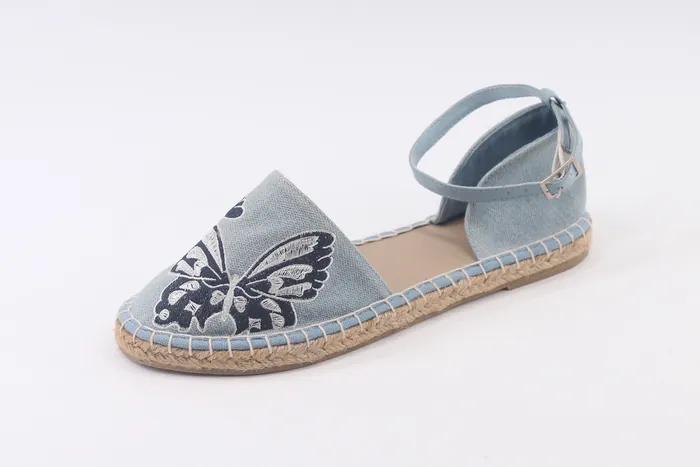
Shop by construction
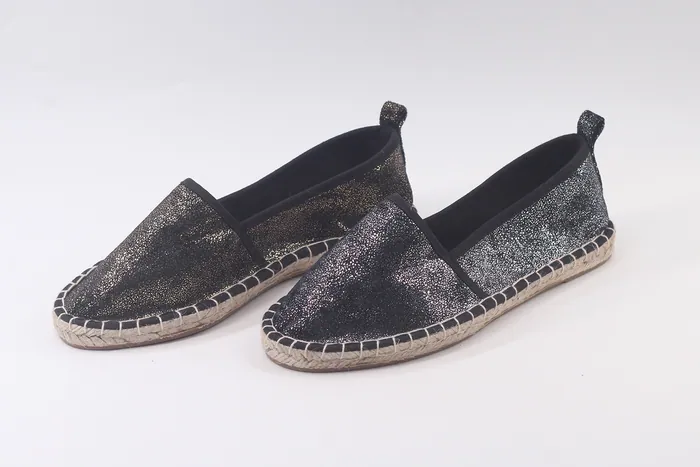
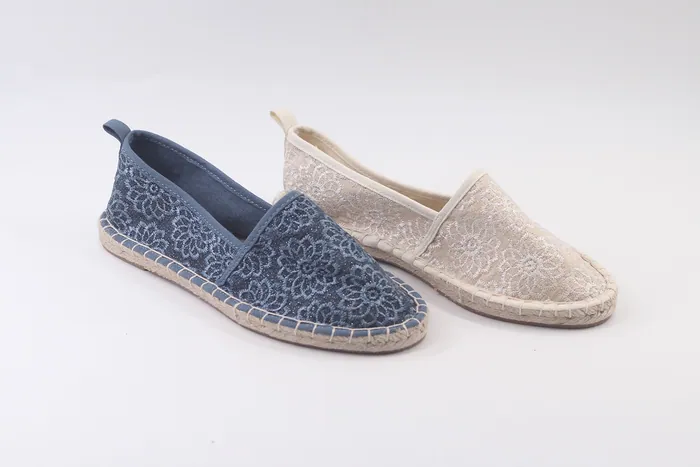
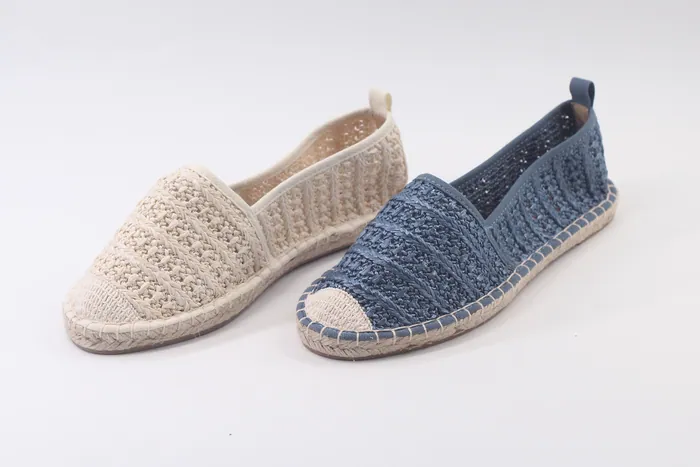
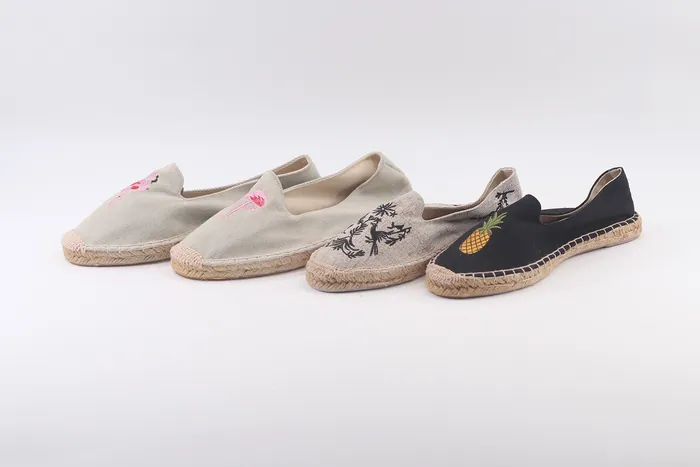
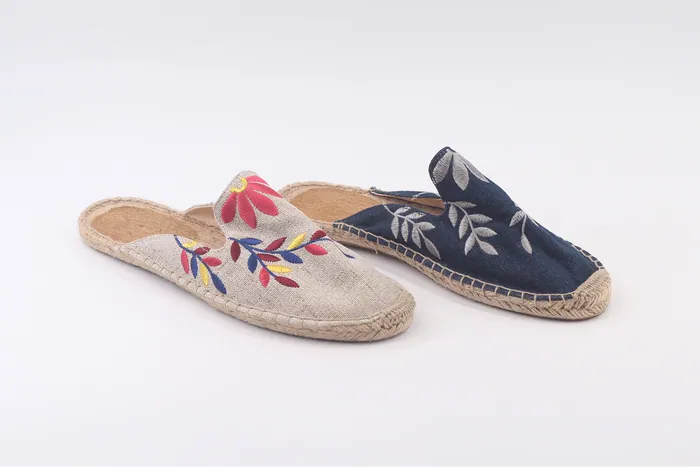
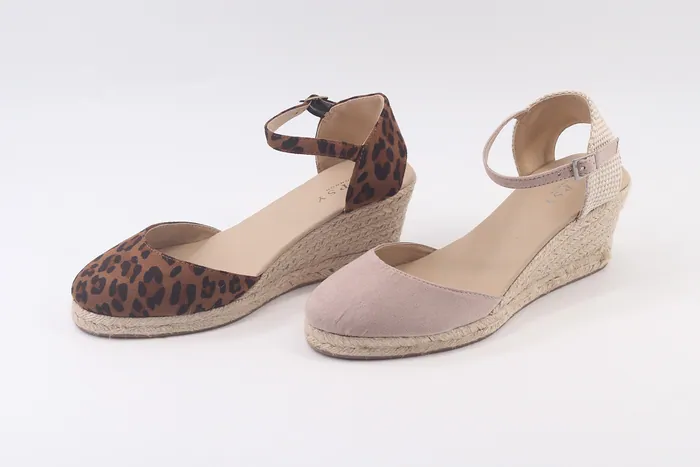
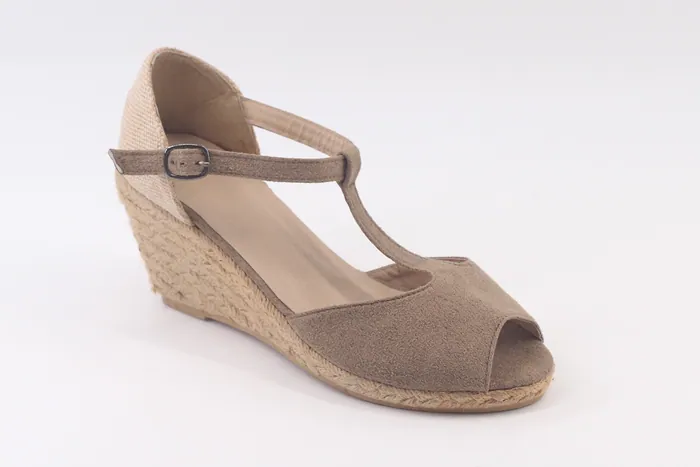
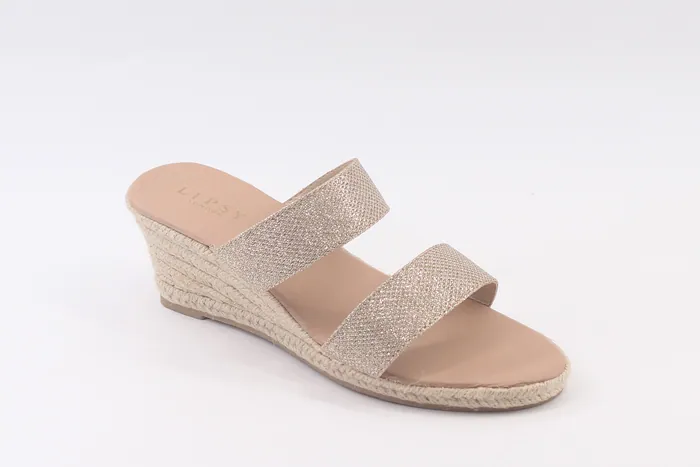
Jute-Sole Espadrilles
A jute sole is a construction decision before it is a design decision. Whether the jute is stitched onto a rubber bottom or left bare changes where the shoe can be sold.
Espadrilles are the one category where the sole, not the upper, sets the price and the market. The braided jute rope is stitched — by machine or by hand — around a core, and that core is where the engineering happens.
The styles below are the jute-soled constructions in our library. Most can also be made with a concealed rubber bottom if you need a street-wear version of the same upper.
12 styles in this collection. Ask for the complete list.
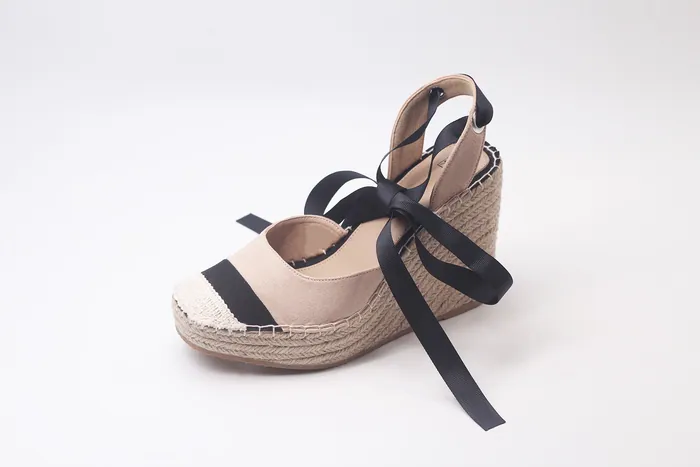
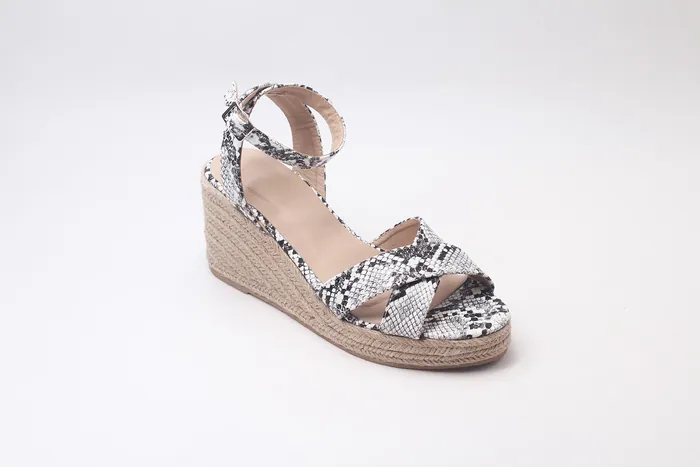
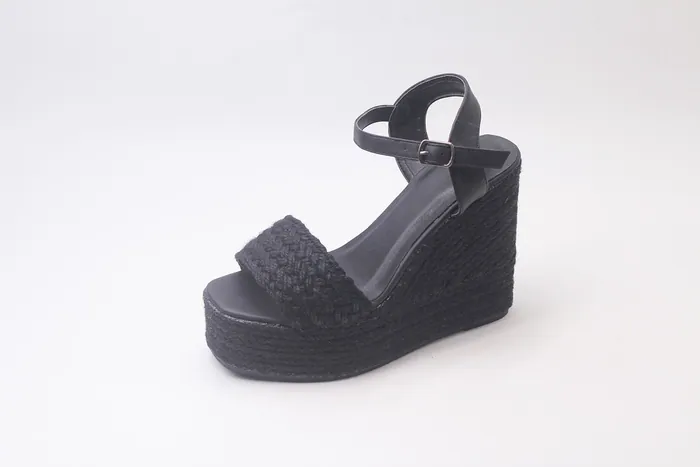
How the sole is built
A jute sole starts as a rope, not a sheet. The rope is wound and stitched around a core — usually a fibreboard or rubber midsole — so the finished sole is a spiral of braid held together by stitching that runs through it.
That is why the stitch pattern is visible and why it matters. A loose stitch lets the braid shift under the foot; a tight one holds the shape but is slower to make. Both are legitimate, at different price points.
Bare jute versus a rubber bottom
Bare jute is an indoor and light-wear sole. It grips reasonably on dry tile and pavement, it wears through on abrasive surfaces, and it does not like water. Sold as a summer shoe for resorts, weddings and short walks, it is fine and it is what most buyers picture.
A rubber bottom — glued and often stitched under the jute — turns the same upper into something a customer can wear on a city street in the rain. It adds cost, a little weight and a visible black edge. Decide which one you are selling before you approve the sample, because the sole cannot be changed after the pattern is set.
The summer window
Espadrilles are a seasonal product with a hard sell-by date. If your customer needs them on a shelf in April, the order has to be placed with enough room for sampling, bulk production and sea freight — and it has to clear Chinese New Year.
The practical consequence is that jute styles are usually developed in the autumn and produced in the winter, which is the opposite of when most buyers start thinking about them. If you are planning a summer range, start the conversation early rather than in spring.
What to specify
Jute colour (natural, bleached or dyed), sole thickness, stitch density and whether the stitch is machine or hand. Then the heel: flat, wedge or flatform, and the height if it is not flat.
Two more lines worth writing down: whether the jute is treated against water spotting, and whether the rubber bottom is plain or has a tread pattern. Both are cheap to specify and expensive to discover later.
Ordering notes
Specification & terms
| Sole | Braided jute, stitched to a core; bare or with a rubber bottom |
|---|---|
| Upper | Textile, canvas, printed fabric or PU |
| Heel | Flat, wedge or flatform, to your specification |
| Size range | EU 36–42 women's as standard, other sizes to order |
| Stitch | Machine-stitched as standard; hand-stitched on request |
| Packing | Your labels, hang tags, polybags, barcodes and cartons |
| MOQ | Quoted per style and per colour. Trial quantities are available for stock constructions — ask us for the exact minimum on the styles you are considering. |
| Sampling | Sample lead time and cost are confirmed with your quotation. Sample cost is normally credited against a confirmed bulk order. |
| Lead time | Confirmed on the order acknowledgement, after sample approval and deposit. Peak season and Chinese New Year need earlier booking. |
| Port | Ningbo / Shanghai, China |
What to send us
Style codes, quantities per style and colour, your market, your target retail price and the date you need the goods. If you are matching a material, send a swatch or a close-up photograph.
Next step
Planning a summer espadrille range?
Tell us the market, the retail price point and the month you need the goods. We will tell you honestly whether the calendar still works.